EL

ERATOSTHENES Centre of Excellence at the Emissions Monitoring from Space and Ground Conference 2026, ESA-ESRIN
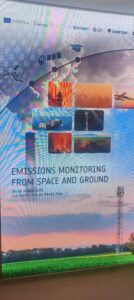
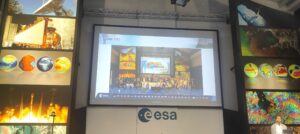
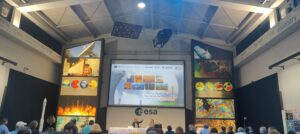
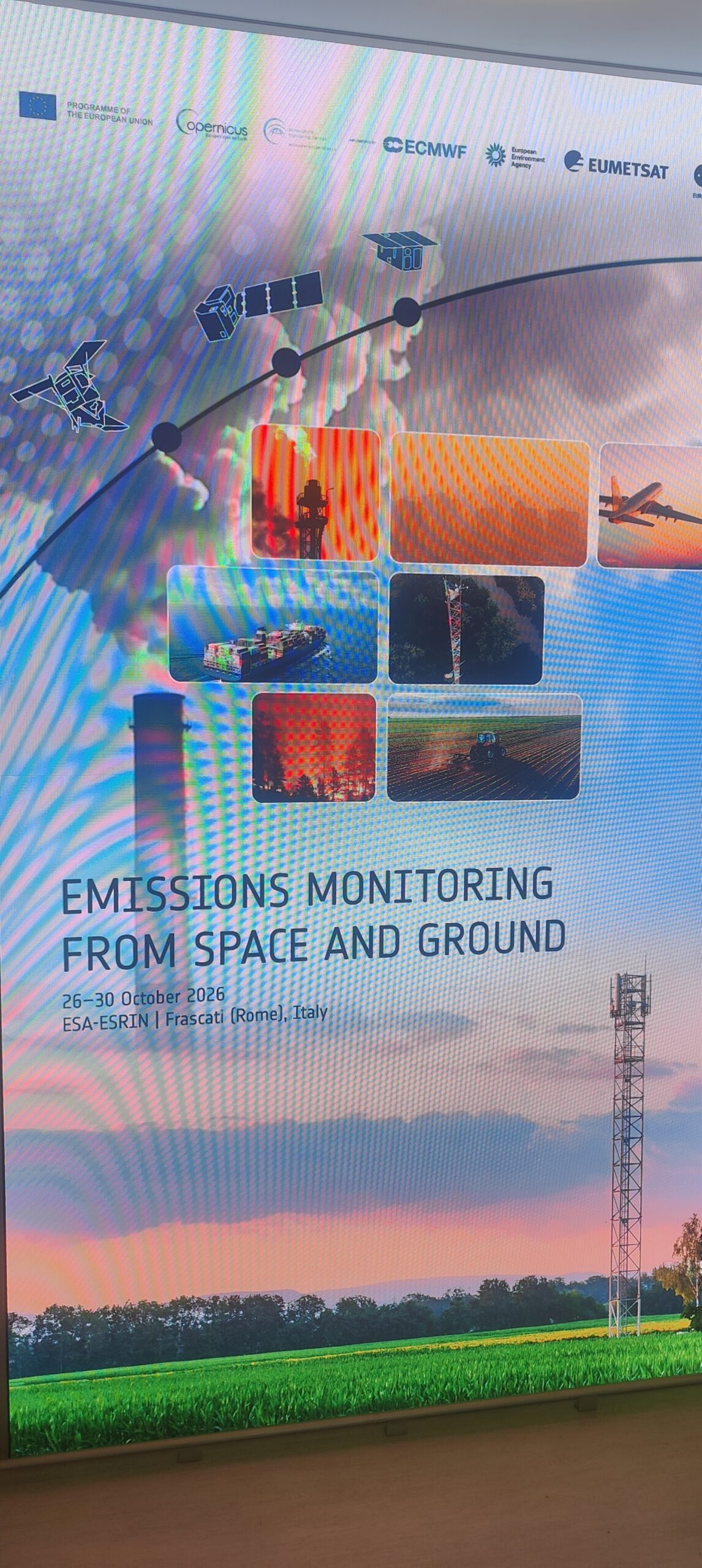
The ERATOSTHENES Centre of Excellence took part in the Emissions Monitoring from Space and Ground Conference 2026, held from 26 to 30 October 2026 at ESA-ESRIN in Frascati, Italy. ESA, the EEA, CAMS and EUMETSAT co-organised the conference. It brought together scientists, national inventory compilers, operational service providers and policymakers who work on the monitoring, reporting and verification (MRV) of greenhouse gas and air pollutant emissions.
Our contribution: downscaling CAMS NO₂ over Cyprus
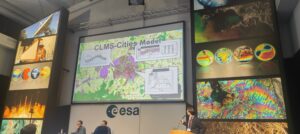
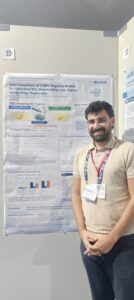
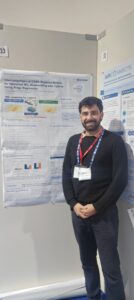
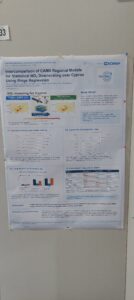
During the poster session, our team presented the work “Intercomparison of CAMS Regional Models for Statistical NO₂ Downscaling over Cyprus Using Ridge Regression” by Orestis Livadiotis, Jude Brian Ramesh, Charalambos Chrysostomou, Silas Michaelides, Diofantos Hadjimitsis and Maria Anastasiadou.
The study looks at how regional air quality forecasts from the Copernicus Atmosphere Monitoring Service (CAMS) can be made more useful at local scale. We took seven CAMS model configurations and put each one through the same Ridge regression framework. The framework combines ground observations with auxiliary geospatial and satellite-derived data, and it takes NO₂ estimates from the native ~10 km CAMS grid down to ~3 km over Cyprus. The models were trained on the summers of 2019–2022 and evaluated independently on June–August 2023.
Key findings:
Higher accuracy: RMSE fell by 38.8–55.8% across all seven CAMS configurations, and the spread in RMSE between models narrowed by 72%.
Less systematic bias: mean absolute model bias dropped by 79%, from 6.56 to 1.37 µg m⁻³, and every model moved closer to zero bias.
Urban detail recovered: the downscaled products recovered 64–68% of the observed summer-average NO₂ contrast between the residential and traffic stations in Nicosia.
Rankings change: the model ranking changed after correction, so native accuracy on its own cannot identify the best downscaled product.
These results support the local use of CAMS products for air quality applications in Cyprus. They also show where more work is needed, including benefits that vary by station and physical constraints on the predictions.
Networking and learning at ESRIN
Beyond presenting our poster, the conference let our team connect with researchers and practitioners from across Europe and beyond, and to discuss possible collaborations. We also followed the latest updates on:
top-down emission estimates that support national inventories,
the status and products of current and upcoming space missions and ground networks,
methane and CO₂ monitoring from local sources,
integrating observations and models into operational MRV systems.
The insights and contacts from the week at ESRIN will feed directly into our ongoing atmospheric and air quality research. They will also strengthen the role of the ERATOSTHENES Centre of Excellence in Earth observation for environmental monitoring in the Eastern Mediterranean.
We thank the organisers for a well-run and inspiring event, and everyone who stopped by our poster for the discussions.
Acknowledgements: This work is supported by the EXCELSIOR project (“ERATOSTHENES: Excellence Research Centre for Earth Surveillance and Space-Based Monitoring of the Environment”), funded by the European Union’s Horizon 2020 programme (Grant Agreement No. 857510), the Government of the Republic of Cyprus, and co-funding from the Cyprus University of Technology.
Conference website: https://emissionsmonitoring2026.esa.int/
#EmissionsMonitoring2026 #ESA #ESRIN #CAMS #Copernicus #AirQuality #NO2 #EarthObservation #ERATOSTHENES #Cyprus